


Nigeria’s route to victory against Tunisia must be built on discipline, patience, and a clear tactical identity. This is not the kind of game for experiments or emotional decisions. It is a chess match, and if the Super Eagles get careless, Tunisia will punish them. Everything must start with structure, because without it, Nigeria will only play into Tunisia’s hands.
The 4-2-3-1 formation is non-negotiable for this match. There is absolutely no need for a diamond midfield or any attempt to introduce a second striker. Tunisia are one of the most compact and tactically disciplined teams on the continent. They defend narrow, they press aggressively in central areas, and they thrive when opponents try to force play through congestion. Adding another striker will only compress space further, make Nigeria predictable, and allow Tunisia to remain comfortable. The 4-2-3-1 provides balance, width, and control, and it gives Nigeria the tools to stretch the game instead of suffocating itself.
At fullback, selection must be based on positional intelligence rather than pace or reputation. Bruno should start ahead of Zaidu. This game will be decided by decision-making and awareness, not by raw speed. Bruno understands spacing better, holds his defensive position with more discipline, and contributes more effectively in build-up play. Against a team like Tunisia, who are clever in exploiting positional mistakes, that awareness is crucial. Bruno may not excel in everything, but he does the basics right, and sometimes that is exactly what wins tight games.
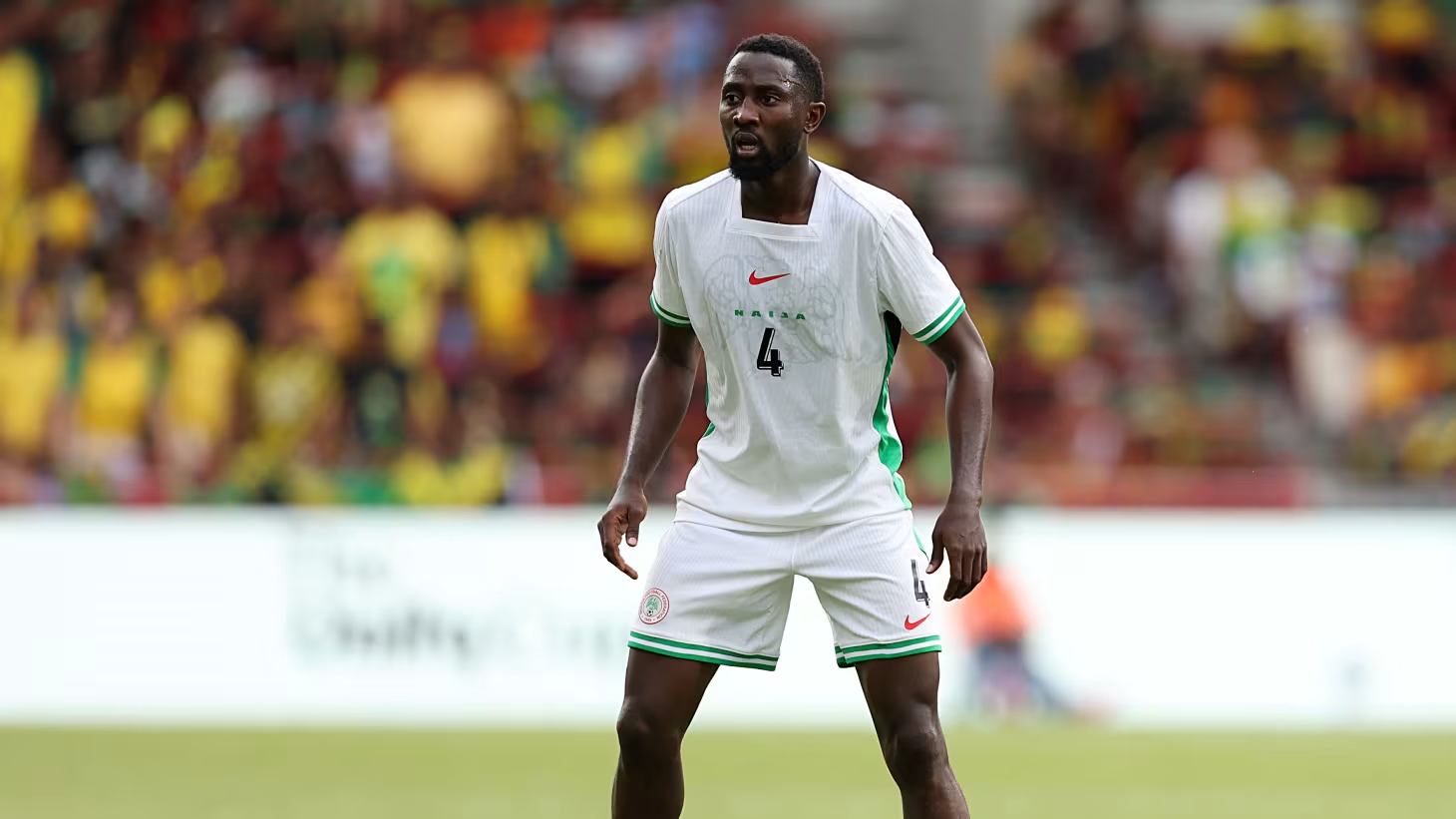
In midfield, Wilfred Ndidi must remain the fixed base, the single most important reference point in Nigeria’s structure. He should sit, screen the defence, and break up play without being dragged out of position. However, relying on Ndidi alone may not be enough. Tunisia are tactically superior in the middle of the pitch and are very comfortable circulating the ball under pressure. This is why Nigeria should consider playing two natural sixes, pairing Ndidi with Frank Onyeka. That double pivot would offer protection, intensity, and balance, ensuring Tunisia do not dominate central zones.
Ahead of them, Alex Iwobi’s role is vital. He must keep the same free role he had against Tanzania, drifting between the lines, linking midfield to attack, and controlling the rhythm of the game. Iwobi should not be boxed into rigid positional instructions. His intelligence off the ball and his ability to find pockets of space can disrupt Tunisia’s compact shape and create moments of unpredictability in an otherwise tight contest.
In attack, restraint and width are more important than numbers. Akor Adams should not start this game. Introducing an extra striker will only help Tunisia stay narrow and aggressive, exactly the environment they enjoy. Nigeria do not need bodies in the box; they need space to attack. That is why Moses Simon must start. His directness, pace, and willingness to run at defenders are key weapons. Tunisia struggle badly against teams that play directly and stretch them horizontally, and Simon is the perfect profile to exploit that weakness.
On the opposite flank, Chukwueze must stay wide and disciplined. There is no need for him to drift inside and add another body to the middle. Width is the strategy. By staying wide, he forces Tunisia to defend larger spaces, pulls their fullbacks out of position, and creates channels for overlapping runs. This is also why Nigeria’s fullbacks are so important in this game. They must support wide play intelligently without abandoning their defensive responsibilities.
Out of possession, Nigeria must press as a unit, not as individuals. Against Tanzania, the pressing was disjointed, with players stepping out alone and leaving gaps behind them. Tunisia will exploit that ruthlessly. Pressing must be coordinated, compact, and timed, with clear triggers. When done properly, it limits Tunisia’s ability to build rhythm and forces them into mistakes.
Winning second balls will again be a decisive factor. It was one of the key reasons Nigeria controlled long spells against Tanzania. Those loose moments after duels often decide who dominates territory and tempo. Nigeria must be aggressive, alert, and organised in those situations. Once possession is regained, the instruction should be immediate and clear: attack. Tunisia are slow in defensive transition, and hesitation will allow them to recover their shape. Quick vertical play can expose them before they settle.
Finally, leadership at the back is a serious concern. Nigeria lack a clear organiser in defence. While Calvin Bassey has been solid individually, he must step up as a leader. He needs to communicate constantly, organise the back line, and ensure proper spacing. Too often, Nigeria’s defensive line becomes flat and poorly coordinated, creating unnecessary danger. Against a team as tactically aware as Tunisia, those mistakes will not go unpunished.
If Nigeria get these details right, they will give themselves a real chance. This will not be an easy game, and it will not be free-flowing. It will be tight, physical, and mentally demanding.
PREDICTION: 1-1
Should we send you latest update about your favourite sports and team?
Enter you email in the box below and hit the subscribe button to join our teaming 876+ sports community.


