


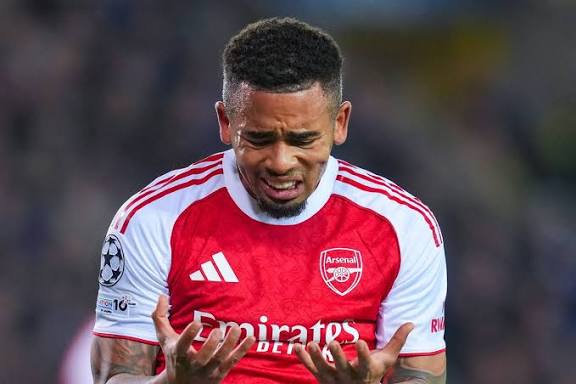
After three consecutive second place finishes, the 2025 26 campaign looked destined to be the season Mikel Arteta finally delivered the Premier League title to Arsenal. Significant summer investment strengthened what many already viewed as the strongest squad in the division, particularly with Liverpool F.C. and Manchester City F.C. going through periods of transition.
From early October, Arsenal have sat top of the table. Their dominance has been built on ruthless efficiency from set pieces and a defence that has rarely allowed opponents even a shot on target. In Europe, they won all eight Champions League matches to finish top of the league phase. Domestically, they have reached the Carabao Cup final and advanced to the fifth round of the FA Cup. Even after a frustrating 2 -2 draw away to bottom placed Wolves on Wednesday, they remain Premier League leaders.
So why the growing doubt?
Since the turn of the year, Arsenal’s league form has faltered. They have won just two of their last seven Premier League matches, and both victories came against promoted sides. Yet context matters. Across the last eight league games, Arsenal have earned the same number of points as Manchester City and two more than third placed Aston Villa. Despite the narrative of collapse, their challengers have not dramatically closed the gap.
There has also been an element of misfortune. Wolves managed just two shots on target in the second half of that 2 2 draw and scored with both. Manchester United scored with all three of their shots on target in a 3 -2 win at the Emirates despite posting a combined expected goals figure of around one. Across those matches, opponents generated limited quality chances yet converted at ruthless rates. Meanwhile, Nottingham Forest and Liverpool failed to register a single shot on target in separate 0- 0 draws against Arsenal.
Why Has the Dip Happened
Data reveals a clear attacking slowdown. Over the last seven league games, Arsenal have produced roughly 20 percent fewer shots and recorded a similar drop in expected goals. Unsurprisingly, goals have declined as well.
Injuries and rotation in the forward line have disrupted rhythm, and supporters have voiced frustration at what they see as a lack of attacking ambition after taking the lead. Rather than extending advantages, Arsenal have allowed opponents back into matches. In recent weeks, Manchester United, Brentford and Wolves all equalised within minutes of Arsenal scoring. Similar patterns appeared in cup ties against Chelsea, Kairat and Inter in January.
Fatigue from competing across multiple fronts, combined with players returning from injury without full sharpness, appears to have taken both physical and mental tolls.
Paradoxically, Arsenal’s defensive underlying numbers have improved during this period. Expected goals against and shots on target faced are lower than across the first 20 league matches. However, they have conceded more frequently, underlining a streak of bad fortune. Three of the six recent goals conceded came from outside the box via exceptional finishes.
The Run In and the Fear Factor
Arsenal currently hold a five point lead, though Manchester City have a game in hand which could cut the margin to two. That scenario mirrors the situation on New Year’s Day. As the fixtures have ticked down, Arsenal’s statistical probability of winning the title has actually increased.
The anxiety stems from history and from Pep Guardiola’s record of closing seasons in devastating fashion. Under Pep Guardiola, City have averaged 30 points from their final 12 league games across the past four campaigns. Arsenal, over comparable periods, have averaged closer to 23.
The equation is simple. If City win all their remaining games, they will be champions. Arsenal are also masters of their own destiny and could even afford a draw at the Etihad in April provided they win their other matches. Realistically, more twists and dropped points are inevitable.
Arsenal and Title Heartbreak
Supporter anxiety is rooted in painful precedent.
Newcastle United’s 1995 96 collapse from a 12 point January lead remains iconic. Manchester United surrendered a 13 point advantage to Arsenal in 1997 98 and famously let an eight point lead slip with six games left in 2011 12, when City claimed their first Premier League title thanks to Sergio Aguero’s dramatic final day goal.
Yet Arsenal have developed a reputation for near misses of their own.
In 2002 03, fresh from a Double and sandwiched between title triumphs, Arsene Wenger’s side led by eight points in early March before a run of two wins in seven league games cost them dearly. A self destructive draw at Bolton after leading 2- 0 and a 3 -2 home defeat to Leeds proved fatal as Manchester United claimed the title by five points.
In 2007 08, a young side built around Cesc Fabregas surged five points clear after 26 games. Eduardo’s horrific injury at Birmingham City marked a turning point. Arsenal won just two of their next 13 matches and finished third, four points behind United and two behind Chelsea.
In 2009 10, late season injuries to Aaron Ramsey, William Gallas, Fabregas and Thomas Vermaelen triggered a collapse that left them 11 points behind champions Chelsea.
In 2010 11, Arsenal were four points off top with a game in hand in early March but took just 12 points from their final 11 matches, finishing fourth and 12 points adrift.
In 2013 14, they led in early February before a 5 1 defeat at Anfield sparked a run of two wins in nine league matches. A 6- 0 loss at Stamford Bridge in Wenger’s 1000th game compounded the slump. They ended seven points off top.
In 2015 16, after a dramatic win over Leicester in February cut the gap to two points, Arsenal faltered while Claudio Ranieri’s side surged. The Gunners collected 16 points from 30 in a key stretch as Leicester powered clear.
More recently, the 2022 23 campaign saw Arsenal top the table for 248 days before consecutive 2- 2 draws against Liverpool and West Ham, followed by a 3-3 draw with Southampton and a 4 1 defeat at the Etihad, handed momentum to City.
In 2023 24, a December slump that included defeats to West Ham and Fulham erased a six point cushion. Although Arsenal responded with a remarkable run of 16 wins in 18 matches, City’s relentless consistency secured the title by two points.
The 2025 26 Outlook
According to Opta’s supercomputer projections, Arsenal currently hold a 79.7 percent chance of winning the 2025 26 Premier League title, with Manchester City at 17.3 percent. Only two weeks ago that figure stood at 93.6 percent when Arsenal were nine points clear. The volatility illustrates how a single result at this stage can reshape an entire season.
Everything remains in Arsenal’s hands. The numbers favour them. The squad depth is stronger than in previous campaigns. The defensive platform is more secure.
But history lingers.
The final stretch will determine whether this season becomes another chapter of almost or the long awaited redemption story for Arsenal.
Should we send you latest update about your favourite sports and team?
Enter you email in the box below and hit the subscribe button to join our teaming 876+ sports community.


