


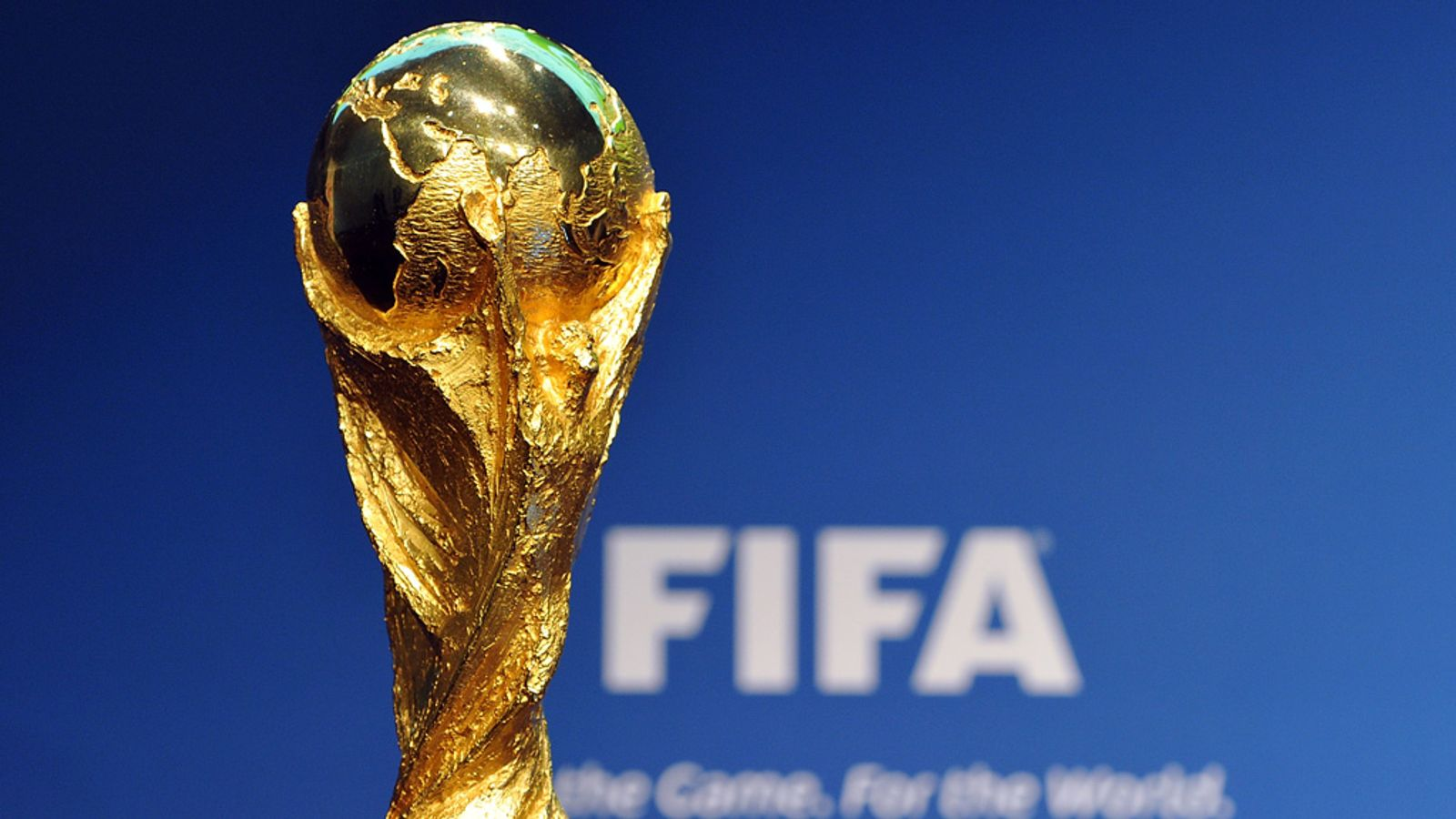
The world turns its attention to Washington D.C. where the draw for the 2026 FIFA World Cup will take place on Friday, 5 December. It is the moment every qualified nation anticipates, when hope becomes structure and the long road to the knockout rounds begins to take shape. Football pauses for a brief second, waiting for the combinations that will define the early rhythm of the largest tournament ever staged.
This World Cup carries a special significance. Nearly a century has passed since the inaugural event in Uruguay in 1930, and the 2026 edition breaks boundaries in size and geography. Forty eight teams will compete in a tournament spread across Canada, Mexico and the United States. It is only the second time the world’s biggest sporting event will be shared by multiple hosts. It is also the first time the competition stretches across an entire continent.
The draw pots are arranged by FIFA ranking. The three hosts sit in Pot One alongside the highest ranked nations in the world. The remaining pots follow the ranking order, with the lowest ranked teams and the eventual play off winners placed in Pot Four. Confederation rules will once again guide the draw, with the exception of UEFA, which sends sixteen teams and therefore allows a limited overlap of European nations within the same group.
At this stage, forty two teams are already confirmed. The remaining six will arrive through play offs that conclude in March of 2026. Among the confirmed nations are four first timers. Cabo Verde, Curaçao, Jordan and Uzbekistan will experience the World Cup for the first time, marking the highest number of debutants since 2006.
Below is a narrative look at the teams that have earned their place and the stories they bring into this historic tournament.
Canada returns to the global stage for only the third time. The country has never won a World Cup match, yet this appearance marks a turning point. For the first time, Canada enters a World Cup as part of a consecutive qualification cycle, signalling a growing strength in North American football.
Mexico arrives as one of the tournament’s most consistent participants. This will be their eighteenth appearance and the latest chapter in a remarkable record of qualification. Their best performances came when they hosted in 1970 and 1986, yet their passion and enduring presence continue to command respect.
The United States steps into its twelfth World Cup and its second opportunity as host nation. The Americans have become a fixture on the world stage, even if their win rate remains among the lowest for teams with an extensive World Cup history. The hope in 2026 is that home soil will inspire a new breakthrough.
Spain enters the tournament as reigning European champions and one of the form sides in world football. The team has enjoyed an extraordinary run without defeat in competitive matches and will attempt to reclaim the title they last won in 2010. Spain has already written its name into football history by becoming the only nation to win the Euro, the World Cup and the Euro again in consecutive cycles. The current squad will attempt to add another chapter to that legacy.
Argentina arrives as the defending world champion. The country seeks to join the exclusive group of teams that have won consecutive titles. Lionel Messi, already the player with the most World Cup appearances, is expected to feature once again, adding depth and experience to a team still glowing from its triumph in Qatar.
France remains one of the most dominant forces of the modern era. Since 1998, the French have appeared in four finals, more than any other nation during that period. They will attempt to reach a third consecutive final and continue a remarkable level of consistency under Didier Deschamps, who has already won the tournament both as a player and a coach.
England enters its seventeenth World Cup and continues the longest uninterrupted qualification run in its history. Despite significant talent, the team has reached only two semi finals since winning the title in 1966. Under Thomas Tuchel, England begins a new chapter led by a foreign coach for only the third time.
Brazil stands alone as the only nation to appear at every edition of the World Cup. The five time champions remain the most successful team in tournament history. Their last triumph came in 2002, and the current side carries the weight of expectation that surrounds every Brazilian squad.
Portugal maintains its status as a permanent presence in the tournament since 2002. The team reached its peak in 1966 but has remained competitive for two decades. Cristiano Ronaldo, already the only player to score in five different World Cups, aims to extend his own record.
The Netherlands return with a familiar ambition. They have reached three finals without lifting the trophy, the most of any nation. Ronald Koeman is expected to make his first World Cup appearance as national team manager, hoping to guide the Dutch to the top step that has always eluded them.
Belgium appears in its fifteenth World Cup, yet the team continues to search for its first title. A golden generation has passed without becoming world champions, and Rudi Garcia will attempt to shape a new identity for the Red Devils.
Germany enters its twenty first World Cup with both pride and pressure. The four time champions have historically been one of the most formidable competitors, but early exits in 2018 and 2022 have added urgency to their journey. Julian Nagelsmann could become the youngest coach at the tournament, bringing a modern approach to a team eager to reclaim its status.
Croatia carries a reputation as one of the most resilient sides in world football. The team has reached the semi finals in the last two editions and holds a perfect record in World Cup penalty shootouts. Zlatko Dalić remains the architect of Croatia’s remarkable era.
Morocco continues to build on its historic fourth place finish in Qatar, the best result any African side has achieved at the World Cup. The team’s consistency has improved, and this marks its third consecutive qualification.
Colombia returns for the first time since 2018, seeking to revive the energy that carried them to the quarter finals in 2014. Their manager, Néstor Lorenzo, brings unique insight as someone who once played in a World Cup final.
Uruguay brings tradition and pedigree into its fifteenth World Cup. The nation that won the first tournament in 1930 remains a respected force. Marcelo Bielsa adds an intriguing tactical element as he manages at the World Cup for the third time.
Switzerland continues one of the most consistent modern records in international football. The team has reached the knockout stage in every major tournament since 2014 and enters another World Cup with the same quiet confidence.
Japan prepares for its eighth consecutive appearance but still seeks a first ever quarter final. Their consistency in qualifying has been admirable, yet progression beyond the Round of Sixteen remains the next step.
Senegal enters its fourth World Cup with rising ambition. The team has grown into one of Africa’s strongest sides, building on its quarter final achievement in 2002.
Iran appears once again with the hope of finally escaping the first round. Despite decades of participation, the team has never advanced, and their goal scoring record remains the lowest among nations with significant World Cup experience.
Korea Republic continues to hold the record for most World Cup appearances by an Asian nation. The team was unbeaten in its qualifying campaign and brings a sense of renewed confidence.
Ecuador arrives after an impressive qualifying run in which they conceded the fewest goals of any South American team. Their defensive discipline shapes much of their identity.
Austria returns to the World Cup for the first time since 1998. Under Ralf Rangnick, the team topped its qualifying group and hopes to restore its historical presence on the world stage.
Australia continues its reliable presence at the World Cup. Their performance in 2022 was one of their strongest ever, delivering multiple victories for the first time.
Norway returns after a long absence. With Erling Haaland in extraordinary scoring form during qualification, Norway enters the tournament with a new generation of star power.
Panama, Egypt, Algeria, Scotland and Paraguay arrive after varying periods away from the tournament. Each carries its own narrative, from Egypt’s search for a first World Cup victory to Algeria’s return powered by Mohammed Amoura’s prolific qualifying campaign.
Tunisia and Côte d’Ivoire reinforce Africa’s representation. Tunisia brings history but still chases a first knockout stage appearance, while Côte d’Ivoire’s perfect defensive record in qualifying offers a glimpse of a determined squad.
Uzbekistan, Qatar, Saudi Arabia, South Africa, Jordan and Cabo Verde add a blend of debut stories, regional pride and returning ambitions. Each arrives with a specific mission, whether it is Uzbekistan’s hopes under Fabio Cannavaro or Jordan’s ambition to make history in its first appearance.
Ghana continues its rich relationship with the tournament and seeks to replicate its memorable 2010 run. Curaçao becomes the smallest nation ever to qualify, guided by the experienced Dick Advocaat. Haiti returns after half a century away, and New Zealand seeks its first ever World Cup victory despite an undefeated record in the 2010 tournament.
Six more teams will complete the field through a combination of European and inter confederation play offs. All remaining qualifiers will be known by the end of March 2026. Once the final names are confirmed, the full shape of the 2026 World Cup will be complete, setting the stage for the most ambitious edition in the history of the sport.
Should we send you latest update about your favourite sports and team?
Enter you email in the box below and hit the subscribe button to join our teaming 876+ sports community.


