


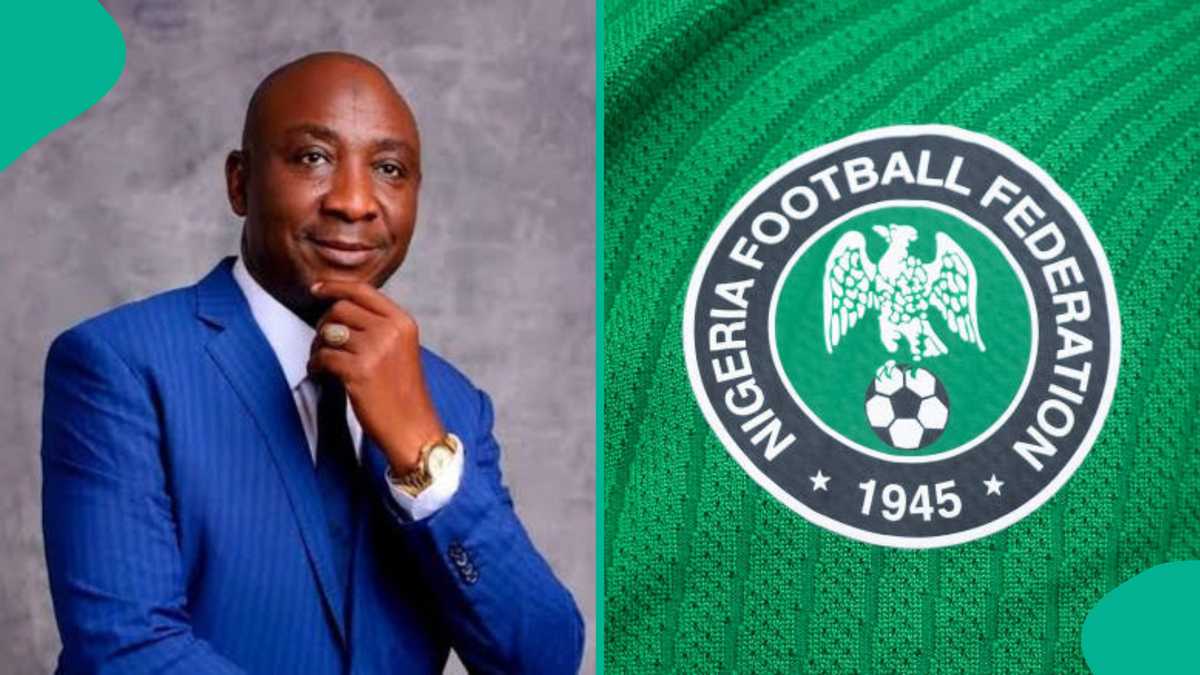
Resigns,
Nigeria Football Federation President Ibrahim Musa Gusau has resigned from his position, bringing an end to an administration that faced sustained pressure over the struggles of the country’s national teams and growing concerns surrounding the management of Nigerian football.
Gusau confirmed his resignation during a world press conference in Abuja on Thursday, August 27, alongside members of the NFF Executive Committee and the General Secretary. Reports of the resignations had earlier emerged through former Super Eagles media officer Obong Colin before the development was officially confirmed.
The decision comes after months of mounting pressure on the federation, with Nigeria suffering a series of major setbacks on the international stage. The most significant was the Super Falcons’ failure to qualify for the 2027 FIFA Women’s World Cup in Brazil, ending a remarkable run that had seen Nigeria participate in every edition of the tournament since its inauguration in 1991.
The Super Falcons’ hopes of reaching the tournament were dealt a major blow at the 2026 Women’s Africa Cup of Nations, where they suffered a 1 0 defeat to Cameroon in the quarter finals. The result ended Nigeria’s title defence and forced the team into the World Cup playoff route.
However, the Falcons were unable to recover as South Africa defeated them 2 1 in the playoff, officially ending their hopes of qualifying for the World Cup. Following the disappointing campaign, the NFF sacked Super Falcons head coach Justin Madugu as pressure continued to build around the federation.
The Super Eagles had also endured a difficult period after failing to qualify for the 2026 FIFA World Cup. Nigeria’s qualification campaign ended in the African playoff after the team lost to the Democratic Republic of Congo on penalties. The Golden Eaglets also failed to secure qualification for the 2026 FIFA U 17 World Cup, adding another setback to the country’s international football fortunes.
Financial concerns further intensified the scrutiny surrounding the NFF. The Economic and Financial Crimes Commission and the Independent Corrupt Practices and Other Related Offences Commission launched investigations into the utilisation of a ₦12 billion Federal Government intervention fund released in 2024 to settle unpaid wages, bonuses and allowances owed to players and officials of the national teams.
The NFF maintained that all relevant records concerning the funds had been handed over to the anti graft agencies as the investigations continued.
The financial scrutiny came shortly before the resignation of Gusau and other members of the NFF leadership, with a fact finding committee also raising serious questions about the federation’s administration. The committee, chaired by Ambassador Fanny I. Amun, submitted its report on August 21, 2026, following its examination of the NFF’s handling of the Super Falcons’ WAFCON campaign.
The report raised allegations that some coaches and officials invited players to camp for financial gain, while NFF board members were accused of interfering in player selection. It also alleged that federation officials entered the Falcons’ camp in Morocco without authorisation.
Concerns over differences in pay between players, coaches and federation officials were also highlighted, alongside questions surrounding money that allegedly went missing during the Morocco camp. The committee subsequently called for stronger financial controls, a clearer separation between administrative and technical responsibilities, and objective criteria for selecting players.
Beyond the immediate concerns surrounding the Super Falcons, the committee identified deeper structural problems within Nigerian football. Weak management of the domestic league, inadequate coaching education and shortcomings in player development were among the issues highlighted as areas requiring urgent attention.
Despite the controversies and setbacks that marked the latter part of his administration, Gusau’s tenure was not without notable achievements. Under his leadership, Nigeria reached the final of the 2023 Africa Cup of Nations, while the Super Falcons returned to the Olympics at Paris 2024 after a 16 year absence.
The NFF also oversaw the development of new training and accommodation facilities at the Moshood Abiola National Stadium in Abuja, providing infrastructure that was intended to improve preparations for the country’s national teams.
However, the recent failures have overshadowed those achievements, with the inability of the Super Falcons to qualify for the 2027 Women’s World Cup representing one of the most damaging moments in Nigerian football history.
The NFF had scheduled its next elective congress for September 27 in Lafia, Nasarawa State. The resignation of Gusau and other members of the leadership is now expected to have a significant impact on that process and could reshape the direction of Nigerian football.
The immediate future of the federation remains uncertain as Nigerian football prepares for a new phase. With investigations into its financial affairs ongoing, governance concerns raised by the fact finding committee and several national teams struggling to meet expectations, the next leadership will face the difficult task of restoring confidence and rebuilding the fortunes of Nigerian football.
Should we send you latest update about your favourite sports and team?
Enter you email in the box below and hit the subscribe button to join our teaming 876+ sports community.


