


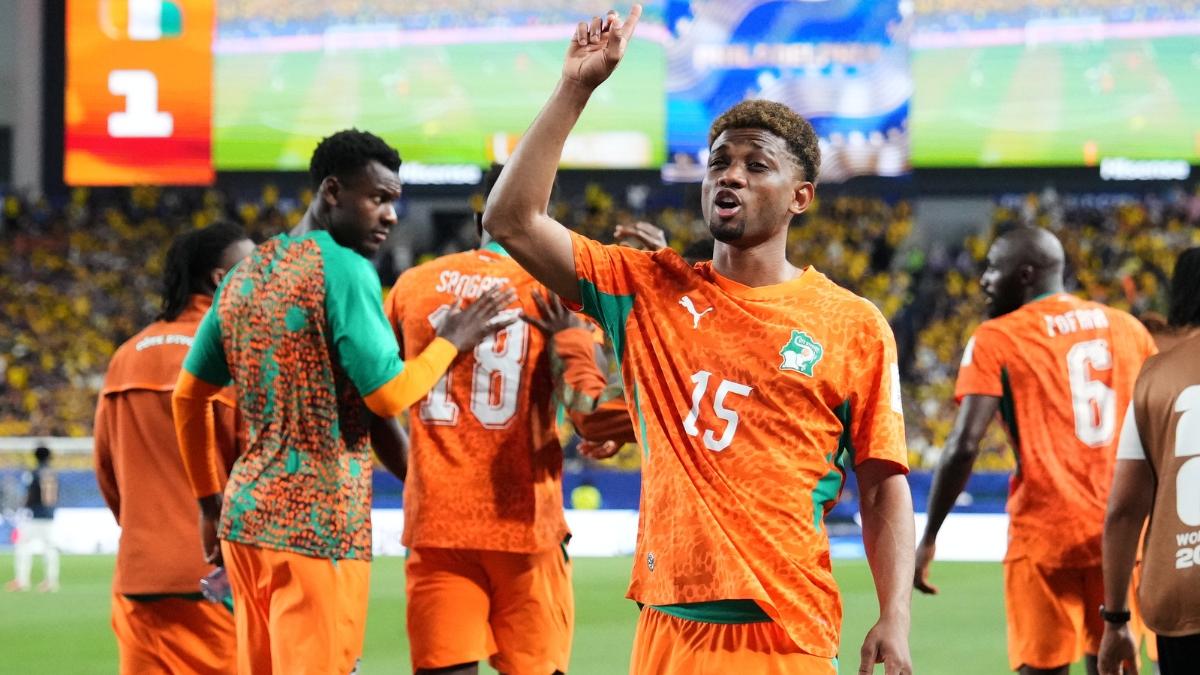
Ivory Coast made a winning start to their 2026 FIFA World Cup campaign after a late strike from Amad Diallo secured a hard-fought 1-0 victory over Ecuador in their Group E opener at Philadelphia Stadium.
Just when the contest appeared destined to end in a goalless draw, the Manchester United winger emerged as the hero for the African champions, coming off the bench to score in the closing moments and hand his side three valuable points. The result not only boosted Ivory Coast’s hopes of progressing from a difficult group but also brought an end to Ecuador’s impressive 19-match unbeaten run in all competitions.
The match was a tightly contested affair from the opening whistle, with both teams showing defensive discipline and limiting clear-cut opportunities. Ecuador enjoyed more control in the early stages and looked comfortable in possession, but they struggled to convert their dominance into meaningful chances.
Ivory Coast, meanwhile, relied on quick transitions and moments of individual quality to threaten the South Americans. Their first significant opportunity arrived when Bazoumana Touré delivered a dangerous low ball into the penalty area that almost caught Ecuador goalkeeper Hernán Galíndez off guard. The shot-stopper reacted well to push the effort away before comfortably collecting Elye Wahi’s subsequent attempt.
As the game settled into a rhythm, Ecuador came agonisingly close to taking the lead on two separate occasions. John Yeboah was inches away from finding the net with a curling effort that crashed against the crossbar, while Alan Minda also saw a powerful strike rattle the woodwork shortly afterwards.
The Ivorians survived those scares and continued to battle their way into the contest. Nicolas Pépé nearly created a breakthrough before halftime, only for Alan Franco to produce an outstanding defensive intervention to deny the winger a clear shooting opportunity.
After the interval, Ivory Coast looked more adventurous and nearly opened the scoring when Wahi connected with an inviting cross from Yan Diomande. However, his effort also struck the crossbar, ensuring the deadlock remained intact.
Ecuador responded by increasing the tempo of their attacks and finally tested goalkeeper Yahia Fofana midway through the second half. Gonzalo Plata unleashed a powerful drive from distance that forced the Ivory Coast goalkeeper into an important save.
As time ticked away, both teams appeared increasingly cautious, aware that a single mistake could prove decisive. With neither side willing to commit too many players forward, a draw seemed the most likely outcome.
However, Ivory Coast found the breakthrough at the perfect moment.
In the dying stages of normal time, defender Wilfried Singo surged forward from deep and drove into Ecuador’s defensive third. Spotting Amad Diallo making a clever run into space, he delivered a precise pass across the face of goal. The substitute showed excellent composure and technique, guiding a first-time finish into the far corner beyond Galíndez to spark wild celebrations among the Ivory Coast players and supporters.
The goal proved to be the match-winner and one of the most dramatic moments of the tournament so far.
For Ecuador, the defeat was particularly painful given their recent record. The South American side entered the World Cup unbeaten in 19 consecutive matches and had built a reputation as one of the most difficult teams to break down. Their qualifying campaign was founded on defensive solidity, having conceded only five goals throughout the CONMEBOL qualifiers.
Despite enjoying spells of dominance against Ivory Coast, they lacked the cutting edge required to turn possession into goals. Their inability to capitalise on the opportunities created by Yeboah and Minda ultimately proved costly.
Ivory Coast, on the other hand, demonstrated the resilience and determination that helped them emerge as one of Africa’s strongest teams in recent years. Their defence remained organised under pressure, while tactical changes in the second half injected fresh energy into the attack.
The introduction of Amad proved particularly influential. The winger’s pace and movement caused problems for Ecuador’s defence, and his decisive contribution could prove crucial in the race for qualification to the knockout stages.
The victory also marked a historic achievement for the Ivorians. It was their first-ever World Cup win against a South American nation, ending a run of defeats against Argentina, Brazil and Colombia in previous tournaments.
Amad’s strike secured his place in Ivory Coast World Cup history as only the fourth substitute from the nation to score in the competition. The goal was also one of the latest winning goals scored by a substitute in a 1-0 World Cup match in modern tournament history.
Another standout performer for Ivory Coast was Yan Diomande, whose constant attacking presence troubled Ecuador throughout the game. The young forward registered 12 touches inside the opposition penalty area, matching one of the highest totals ever recorded by an Ivory Coast player in a World Cup match.
The result leaves Ivory Coast in a strong position heading into their next Group E fixture and provides an early boost to their ambitions of reaching the knockout rounds. With confidence growing and key players delivering in decisive moments, the African side will believe they have what it takes to challenge for a place in the last 16.
For Ecuador, the focus will now shift to recovering from a disappointing defeat and ensuring that their World Cup campaign remains on track. Despite the setback, their overall performance suggested they possess enough quality to bounce back in their remaining group matches.
But on a night when chances were scarce and tension filled the air, it was Amad Diallo’s late intervention that made all the difference, handing Ivory Coast a memorable victory and one of the most dramatic finishes of the tournament so far.
Should we send you latest update about your favourite sports and team?
Enter you email in the box below and hit the subscribe button to join our teaming 876+ sports community.


