


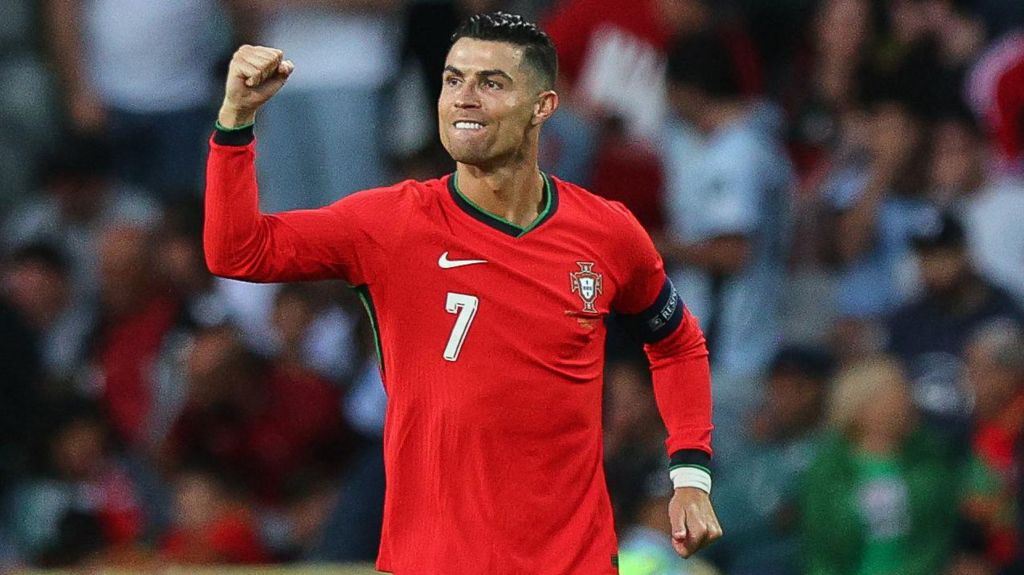
There was an unmistakable sense of finality when the full-time whistle sounded in Dallas. Portugal’s 1-0 defeat to Spain did more than end their 2026 FIFA World Cup campaign. It almost certainly marked the final World Cup appearance of Cristiano Ronaldo, bringing to a close one of the greatest international careers football has ever witnessed.
For nearly two decades, Ronaldo has defined Portugal’s ambitions on the biggest stages. Every tournament carried the same expectation. If Portugal were to achieve something extraordinary, their captain would almost certainly be at the heart of it. This time, however, the script ended differently. Spain progressed, Portugal departed, and the one major honour that consistently escaped Ronaldo’s remarkable career remained beyond his reach.
At 41 years old, Ronaldo arrived in North America knowing this would be his final opportunity. He admitted before the round-of-16 clash that the tournament would be his last World Cup, although he hoped it would not end against Spain. Monday’s defeat closed the book on a World Cup journey that began twenty years earlier in Germany.
His numbers alone explain why his international career will remain one of football’s great benchmarks. Ronaldo finished with 233 appearances for Portugal, extending his record as the most-capped player in men’s international football. He also leaves the international stage as its all-time leading goalscorer with 146 goals, records that may stand for many years.
The World Cup itself became another stage on which he accumulated milestones. Across six tournaments, he scored 11 goals in 27 appearances, making him Portugal’s highest scorer in World Cup history and second only to Lionel Messi for total appearances at the competition. He also became the first player to score in six different men’s World Cups, a feat that reflects not only his talent but also an extraordinary ability to reinvent himself across generations of football.
The teenager who dazzled defenders with explosive dribbling in 2006 gradually evolved into one of history’s most prolific goalscorers before eventually becoming a penalty-box striker who relied on movement, anticipation and finishing rather than blistering pace. Few elite footballers have adapted so successfully to the inevitable effects of age, allowing Ronaldo to remain relevant long after many of his contemporaries had retired.
Against Spain, there were still glimpses of the player who has tormented defenders throughout his career. Portugal struggled to create clear opportunities, yet Ronaldo remained their most dangerous attacking outlet for long periods. He forced Unai Simón into two saves during the opening half and consistently looked the likeliest Portuguese player to test the Spanish defence, even if the decisive breakthrough never arrived.
Ultimately, Portugal lacked the attacking fluency required to unsettle one of the tournament favourites. Mikel Merino’s late winner settled a tense contest and confirmed Portugal’s elimination, leaving Ronaldo unable to add a twelfth World Cup goal to his remarkable collection.
Questions will inevitably be asked about Portugal’s tactical approach and whether Roberto Martínez remained too loyal to his captain. Ronaldo’s leadership and experience remain invaluable, but modern international football increasingly demands relentless pressing, mobility and collective movement. At 41, even one of the greatest athletes the sport has produced cannot escape time entirely.
That debate, however, should not overshadow what Ronaldo has meant to Portuguese football. Before his emergence, Portugal were respected but inconsistent contenders. During his career they became perennial challengers, winning the European Championship in 2016 and the UEFA Nations League while regularly reaching the latter stages of major tournaments. Ronaldo helped transform expectations, convincing an entire football nation that competing for trophies was no longer an ambition but an obligation.
His influence also extended far beyond silverware. Generations of Portuguese players grew up idolising him, inspired by his relentless professionalism and extraordinary standards. The current squad, featuring established stars and emerging talents alike, exists partly because Ronaldo helped elevate Portugal’s status within world football.
Yet every era eventually reaches its conclusion.
Portugal now find themselves at an important crossroads. The foundations of another talented generation are already in place, and the challenge for Martínez, or whoever leads the national team into the next cycle, is to build an identity that no longer revolves around one individual. The transition will not be easy, but it is unavoidable.
For Ronaldo, the World Cup will remain the one great prize missing from an otherwise unparalleled career. He conquered England, Spain, Italy and Saudi Arabia. He lifted five UEFA Champions League titles, won the European Championship with Portugal, claimed multiple Ballons d’Or and rewrote countless scoring records. Yet football’s biggest trophy remained just beyond his grasp.
History is unlikely to judge him by that omission alone.
Instead, Ronaldo will be remembered as one of the defining footballers of the modern era, a player whose longevity matched his brilliance, whose ambition constantly pushed the boundaries of what seemed possible, and whose records reshaped expectations for generations to come.
His final World Cup ended in defeat, but his place among football’s immortals was secured long before the final whistle sounded in Dallas.
Should we send you latest update about your favourite sports and team?
Enter you email in the box below and hit the subscribe button to join our teaming 876+ sports community.


