


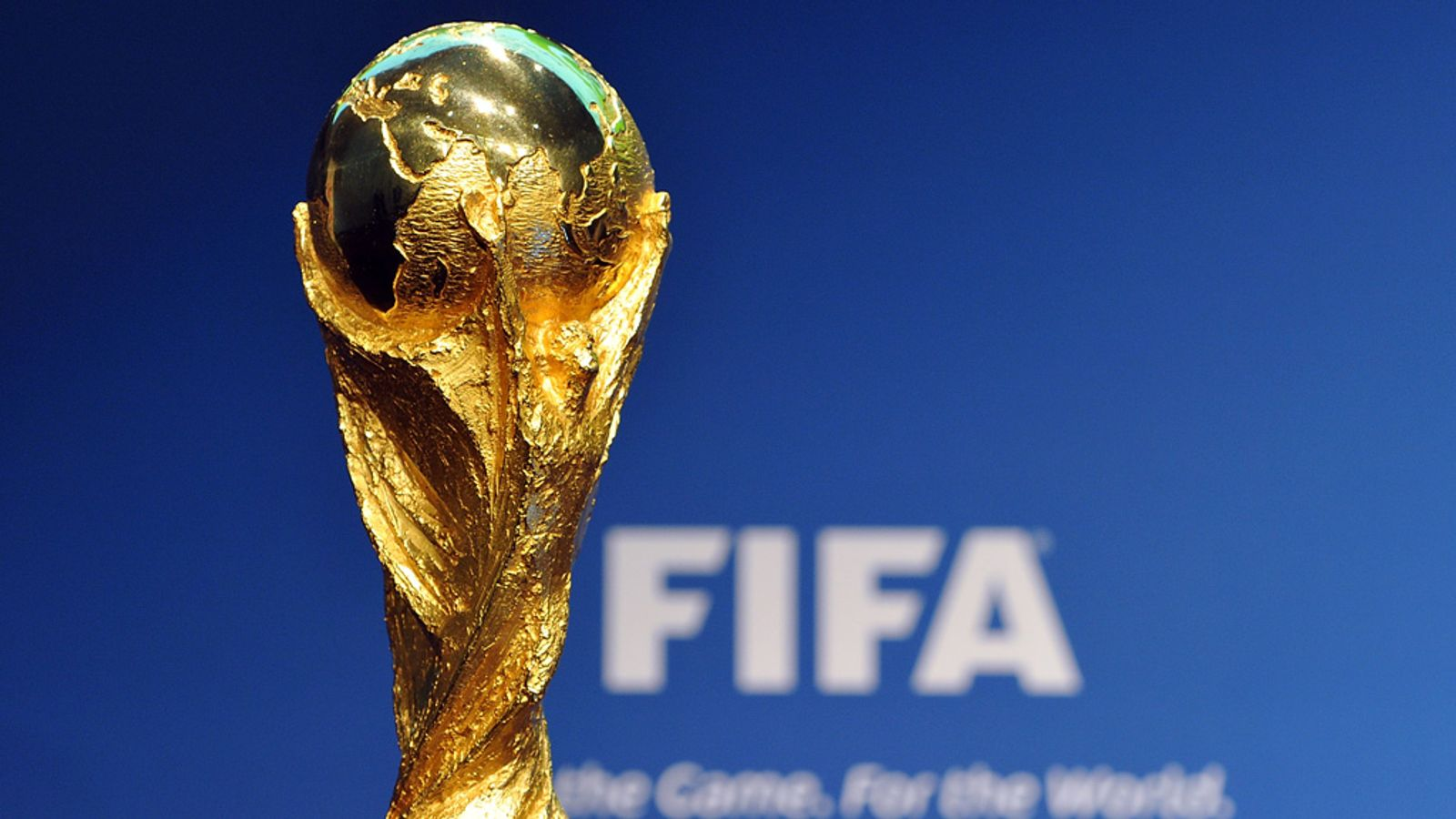
The curtain has fallen on the biggest FIFA World Cup in history, with Spain crowned champions after defeating Argentina 1-0 in the final. Across 104 matches played in the United States, Canada and Mexico, the expanded 48 team tournament produced unforgettable storylines, record breaking performances, dramatic upsets and moments that will shape football conversations for years.
From a historic Golden Boot race to Lionel Messi’s extraordinary final World Cup campaign, here are the defining themes that made the 2026 FIFA World Cup one of the most memorable editions ever staged.
Record breaking goals lit up the tournament
The expansion from 32 to 48 teams naturally meant more matches and, consequently, more goals. By the end of the tournament, fans had witnessed 308 goals in 104 matches, smashing the previous World Cup record by 136 goals.
Even more impressive was the scoring rate. The tournament averaged 2.96 goals per game, the highest at any World Cup since the 1970 edition (2.97), proving that the increase wasn’t simply a result of having more fixtures but also of more attacking football.
Although the tournament began cautiously, with 10 of the opening 15 games producing no more than two goals, the floodgates soon opened. High scoring contests became a regular feature, including England’s thrilling 4-2 victory over Croatia, Turkey’s dramatic 3-2 win against the United States, Morocco’s entertaining 4-2 triumph over Haiti, Sweden’s 5-1 demolition of Tunisia and Algeria’s pulsating 3-3 draw with Austria.
The knockout rounds continued that attacking trend. Three Round of 16 matches produced five goals each, while the quarter finals delivered 12 goals across four games. Even the third place playoff entered the history books, with England defeating France 6-4 in the highest scoring third place match ever played at a World Cup.
Perhaps the biggest surprise was the quality of finishing. Teams scored 294 non own goals from 271.3 expected goals (xG), making 2026 the first World Cup since detailed data has been recorded where players actually outperformed their expected goals. It underlined just how clinical the world’s best attackers were throughout the competition.
The greatest Golden Boot race in World Cup history
Few World Cups have featured so many elite forwards performing at their absolute peak simultaneously.
Lionel Messi, Kylian Mbappé, Harry Kane, Erling Haaland and Jude Bellingham all delivered remarkable campaigns, creating arguably the greatest Golden Boot battle the tournament has ever witnessed.
Messi exploded out of the blocks with a hat trick against Algeria before adding goals in each of Argentina’s first five matches to establish himself as the early frontrunner.
However, Kane, Mbappé and Haaland refused to let him pull away. All three scored braces in their opening fixtures before maintaining relentless consistency throughout the tournament.
While Messi finished with eight goals, his scoring slowed during Argentina’s final three matches, opening the door for Mbappé to surge ahead. The French superstar eventually claimed the Golden Boot with 10 goals, becoming only the fourth player in World Cup history to score double figures in a single tournament.
England captain Harry Kane added six goals during another outstanding international campaign, while Norway’s Erling Haaland announced himself on the biggest stage with seven goals, helping eliminate five time champions Brazil before his side bowed out to England.
Even Jude Bellingham, playing from midfield, finished with seven goals to emerge as England’s leading scorer despite not being considered an out and out striker.
The quality and consistency displayed by football’s biggest attacking stars ensured the race for the Golden Boot remained alive until the final days of the tournament.
Penalty misses became one of the tournament’s biggest talking points
While finishing from open play reached historic levels, penalties told a completely different story.
Only 41 of the 62 penalties taken throughout the tournament, including both normal time and shootouts, found the back of the net, producing a conversion rate of just 66.1 percent, the lowest recorded at any FIFA World Cup since statistics began in 1966.
Several of football’s biggest stars surprisingly struggled from 12 yards.
Lionel Messi missed both of his penalties during the tournament, while Kylian Mbappé saw one saved. Kai Havertz also failed from the spot, as did Achraf Hakimi, Justin Kluivert and Bruno Guimarães.
Harry Kane and Granit Xhaka were the only players to successfully convert multiple penalties, although Kane’s first effort against Croatia had initially been saved before being retaken because of encroachment.
Penalty shootouts proved equally dramatic, with defenders unexpectedly taking several crucial kicks. Centre backs converted only five of the 11 penalties they attempted, contributing significantly to the unusually low success rate.
The numbers highlighted the immense psychological pressure associated with World Cup penalties, even for the game’s finest finishers.
Lionel Messi proved age is just a number
Perhaps no storyline captured the imagination more than Lionel Messi’s remarkable final World Cup campaign.
At 39 years old, many expected the Argentine legend to provide moments of inspiration rather than dominate games. Instead, he remained the heartbeat of Argentina’s march to the final.
Messi finished the tournament with eight goals and four assists, directly contributing to 12 of Argentina’s 19 goals. He also became the oldest player ever to score a World Cup hat trick and added several more records to an already unmatched career.
His influence stretched beyond goals. Messi led the tournament in progressive passes, expected assists and overall attacking involvement, once again proving he remained football’s most complete player despite approaching his 40th birthday.
Against England in the semi finals, he produced two assists after exploiting the space left by Thomas Tuchel’s increasingly defensive tactics. His quick thinking corner created Argentina’s equaliser before his inch perfect cross set up Lautaro Martínez’s dramatic winner.
Messi ultimately received the Silver Ball after narrowly missing out on the tournament’s Best Player award to Spain’s Rodri, but his performances further strengthened his claim as the greatest footballer of all time.
His remarkable longevity also reflected a broader trend. Seven players aged 40 or older featured during the tournament, including Cristiano Ronaldo, Luka Modrić, Guillermo Ochoa, Manuel Neuer, Fernando Muslera, Vozinha and Edin Džeko.
The average age of starting lineups reached its highest level since detailed records began, demonstrating how advances in sports science, nutrition and fitness continue extending elite careers.
For Messi, however, age appeared almost irrelevant. Nearly four years after insisting Qatar 2022 would be his final World Cup, he once again became one of the competition’s defining stars, leaving supporters wondering whether football’s greatest icon might somehow have one last chapter left before 2030.
Should we send you latest update about your favourite sports and team?
Enter you email in the box below and hit the subscribe button to join our teaming 876+ sports community.


