


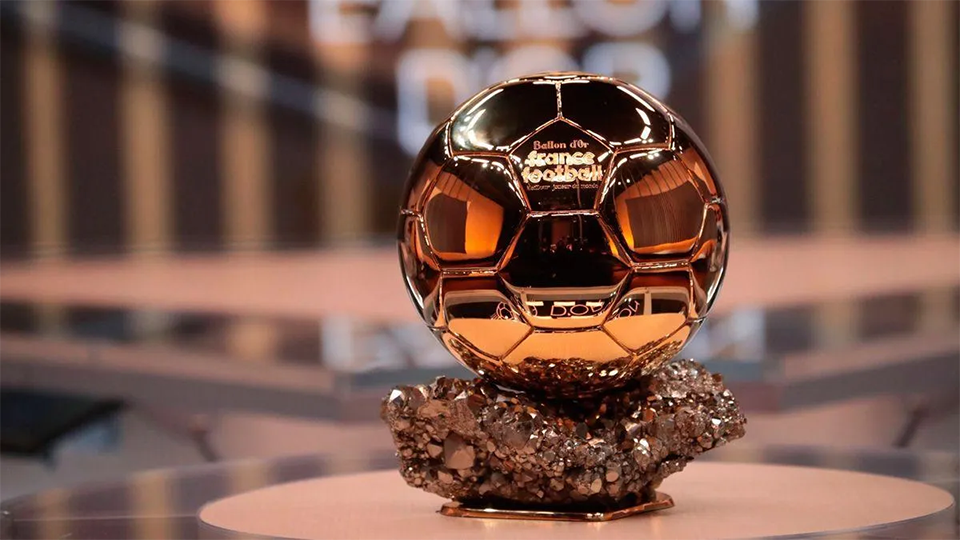
The 30 nominees for the 2026 Ballon d’Or have been revealed, and this year’s race brings together an unusually broad collection of elite individual seasons, major trophies and defining World Cup moments. The winner will be announced on Monday, October 26, with the competition featuring established superstars, emerging talents and several players whose biggest contributions came on the international stage. From record-breaking goalscoring numbers to extraordinary passing figures and decisive performances in the biggest matches, the statistics behind each nominee offer a clearer picture of how they arrived on the shortlist.
Kylian Mbappé enters the conversation with perhaps the most obvious statistical case among the attacking players. The Real Madrid forward finished as La Liga’s leading scorer with 25 goals and also topped the Champions League scoring charts with 15. Across all competitions, he produced 42 goals in 44 appearances. His World Cup was even more historic. Mbappé scored 10 times for France, making him the leading scorer in men’s World Cup history at just 27, while becoming the first player to win the tournament’s Golden Boot more than once.
Harry Kane has an equally compelling numbers case after producing the most prolific season of his career. The Bayern Munich striker scored 61 goals in 51 appearances, finishing 19 goals clear of every other player from Europe’s top five leagues. His 36 Bundesliga goals earned him second place in the European Golden Shoe standings. Kane has now finished among the continent’s leading scorers often enough to sit behind only Lionel Messi and Cristiano Ronaldo in Golden Shoe victories. A Ballon d’Or triumph would also make him the first English winner since Michael Owen in 2001.
Lionel Messi remains a statistical outlier even at this stage of his career. During the qualifying period, the Inter Miami star recorded 52 goal involvements in just 30 MLS appearances, producing 29 goals and 23 assists. He led the league in goals, assists and overall chances created, with 97, while also leading in open-play chances created with 78. For Argentina, Messi added 13 goals and seven assists across 14 matches. The 2026 World Cup was his final appearance at the tournament, and he still managed 12 goal involvements on the biggest international stage.
Ousmane Dembélé is attempting something that has become increasingly rare in modern football. The reigning Ballon d’Or winner is trying to retain the award, a feat last achieved by Messi in 2021. His season with Paris Saint-Germain gave him a strong platform to do so, with 20 goals and 11 assists across 40 appearances. His 31 goal involvements worked out at one every 71 minutes, underlining the efficiency of his contribution.
Lamine Yamal, meanwhile, has continued to make his case as the defining young attacking player of his generation. The Barcelona winger recorded 41 goal involvements, scoring 24 times and supplying 17 assists. That total was 19 higher than any other under-20 player in Europe’s top five leagues. Yamal led La Liga in assists and chances created, producing 118 chances in total, including 107 from open play. With his 19th birthday still to come in July, his numbers are remarkable even before considering the level at which they were produced.
Michael Olise also delivered a season that stands out statistically. In his second campaign with Bayern, he accumulated 48 goal involvements in 52 appearances, including 22 goals and 26 assists. He was the only player from Europe’s top five leagues to reach at least 20 goals and 20 assists. His Champions League campaign produced another six assists, the most in the competition, while his 4.9 expected assists ranked him highly as a creator. For France, he supplied seven assists at the World Cup, the most recorded by any player in the competition since 1966.
Jude Bellingham’s season was more complicated at club level, with Real Madrid ending the campaign without a trophy for the first time since 2009-10. His international numbers, however, offered a significant counterpoint. England reached the World Cup semifinals, their best finish since 1966, and Bellingham scored seven times. Two of those goals came in a 2-1 quarter-final victory over Norway, while he also scored twice in England’s 3-2 round-of-16 win over Mexico at the Azteca. His seven goals were the most ever scored by an England player at a single men’s World Cup.
Rodri’s nomination is another example of how the World Cup can reshape the Ballon d’Or conversation. His club season was disrupted by his recovery from an ACL injury, but his performances for Spain were outstanding. He completed 756 successful passes at the World Cup, the highest total by any player at a men’s tournament in the past 60 years. His 122 line-breaking passes were also the most in that period, with only Xabi Alonso’s 126 in 2010 ahead of him. As Spain’s captain, Rodri helped lead the team to the World Cup and collected the Golden Ball as the tournament’s outstanding player.
Spain’s success also strengthened the cases of several defenders. Marc Cucurella played all 750 minutes of Spain’s World Cup campaign, more than any other Spanish player. He featured in every minute of all eight matches, during which Spain conceded only once and allowed just 0.3 expected goals per game. Pau Cubarsí combined his domestic success with Barcelona with a major international breakthrough, winning La Liga before helping Spain to the World Cup and Young Player of the Tournament awards. His 671 completed passes ranked second at the tournament behind Rodri, while his 33 progressive passes were the most by any defender. He also produced 104 line-breaking passes, trailing only Rodri.
Fabián Ruiz was another member of the rare group able to combine Champions League and World Cup success in the same season. He became one of only 10 players ever to win both competitions while playing in both finals. For PSG, he recorded two goals and five assists in 34 appearances. He also played in all eight of Spain’s World Cup matches, starting four, and scored the opening goal in the quarter-final victory over Belgium.
The PSG contingent is particularly strong this year. Marquinhos captained the French champions to a second consecutive Champions League title and an 11th Ligue 1 crown, appearing in 15 of their 32 matches. Vitinha was central to the European triumph, completing 1,589 passes in the Champions League, 481 more than any other player. He also won possession in the opposition’s final third 17 times, the highest figure in the competition.
Nuno Mendes was one of only two PSG players to start all 17 Champions League matches, alongside Willian Pacho. Mendes won possession 102 times, more than any other player in the tournament, while he also created four big chances for Portugal at the World Cup. Pacho supplied his own defensive numbers, making 81 tackles across all competitions, second only to Warren Zaïre-Emery among PSG players despite playing 10 fewer matches. In the Champions League final, Pacho made 11 clearances, surpassed only by Arsenal’s Gabriel.
João Neves also made his influence felt in PSG’s European campaign. He played in 14 of their 17 Champions League matches, scoring seven goals and providing four assists across the season. His defensive work was particularly notable, with 32 tackles and 19 interceptions, both the highest totals for PSG in the competition. His performance in the final was remarkable given his size. At 5-foot-9, Neves won six of his 10 aerial duels, more than any other player in the match.
Achraf Hakimi added another dimension to PSG’s success. He captained Morocco at the Africa Cup of Nations and contributed three goals and eight assists in 32 appearances for his club. Only three PSG teammates registered more assists. At the World Cup, Hakimi created 17 chances, a total surpassed by only four players in the tournament.
Khvicha Kvaratskhelia also enjoyed a productive first season at PSG, finishing with 19 goals and 10 assists for 29 goal involvements. His 19 club goals represented a personal best. In Ligue 1, he averaged 2.7 successful take-ons per 90 minutes, the highest figure among players who played more than 1,400 minutes.
Arsenal’s defensive strength provides another major storyline in the nominations. Gabriel Magalhães helped the club reach the Champions League final while producing the competition’s strongest defensive numbers. Arsenal conceded only seven goals across 15 matches, the fewest of any team, and faced just 0.9 expected goals per game. Domestically, Arsenal conceded only 27 goals, eight fewer than Manchester City, while recording 17 clean sheets with Gabriel, the most by a defender. That defensive record was their best since the Invincibles conceded 26 in 2003-04. When Gabriel was on the pitch, Arsenal conceded once every 138 minutes, the best ratio among defenders who played at least 2,000 minutes. His missed penalty in the Champions League final shootout was a painful ending to an otherwise outstanding campaign.
William Saliba’s influence on Arsenal’s league campaign was similarly clear. Arsenal won 71 percent of their Premier League matches when he played, compared with 57.1 percent when he did not. He was dribbled past only seven times, while among similarly used defenders only Virgil van Dijk and Ezri Konsa were beaten fewer times. Saliba also completed 92.9 percent of his passes, ranking third among players with more than 2,000 attempts.
Declan Rice provided another statistical foundation for Arsenal’s title campaign. He played 3,099 Premier League minutes, missing only one match, while averaging 5.2 recoveries per 90 minutes. His total distance covered reached 391.1 kilometres. Rice was particularly influential from set pieces, leading the Premier League for expected goals from corners with 2.7 and for shots following corners with 56.
Erling Haaland remained one of the Premier League’s most reliable sources of goals. He scored 27 league goals, finishing third in the Golden Boot race for the fourth time in his career. Only Thierry Henry and Mohamed Salah have won the award more often. Internationally, Haaland scored 20 times in 12 appearances for Norway, including seven at the World Cup. He scored twice against Brazil in the round of 16 and extended his remarkable run to 14 consecutive competitive internationals with a goal.
Vinícius Júnior produced 32 goal involvements for Real Madrid, scoring 22 goals and providing 10 assists. Only Mbappé registered more for the club. Yet his creativity and involvement in attacks were just as significant as his direct scoring numbers. Vinícius generated 139 shot involvements following carries across all competitions, including 81 shots and 58 chances created, the highest total among players from Europe’s top five leagues.
Luis Díaz delivered a similarly productive season after moving to Bayern. He registered 45 goal involvements in 51 appearances, including 26 non-penalty goals and 19 assists. Only Michael Olise and Bruno Fernandes supplied more assists among players from Europe’s top five leagues. Díaz was also a constant threat when carrying the ball into dangerous areas, completing 30 take-ons in the opposition penalty area in the Bundesliga, the most in the competition. His carries led to 66 shots, with only Olise producing more.
Fernandes’ creative output was among the Premier League’s most impressive. He set a new league record with 21 assists during the 2025-26 season and created 136 chances, with only Mesut Özil’s 146 in 2015-16 ahead of him. Across all competitions, Fernandes created 142 chances for Manchester United, the highest total among the nominated players in the relevant club data.
Lautaro Martínez continued his remarkable consistency for Inter, scoring 22 goals and providing six assists in 45 appearances. It was his fifth consecutive season with at least 20 goals. His 17 Serie A goals placed him second in the Capocannoniere race and gave him another major scoring milestone. Among foreign players, only Gunnar Nordahl and Michel Platini have finished as Serie A top scorer more often. For Argentina, Martínez added eight goals in 14 matches, with only Messi scoring more.
Sadio Mané’s nomination may have surprised some observers, but his season was backed by important contributions for both club and country. He helped Senegal win the Africa Cup of Nations, scoring twice and assisting three times. His 19 chances created from open play were at least eight more than any other player at the tournament. He also created 12 open-play chances for Senegal at the World Cup, more than twice the total of any teammate. At Al-Nassr, he scored 10 goals and added six assists in 25 appearances as the club won the Saudi Pro League.
Julián Quiñones was another prolific scorer outside Europe’s traditional top competitions. He scored 37 goals in 35 appearances for Al-Qadsiah, including 33 in the Saudi Pro League. That made him the league’s leading scorer ahead of Ivan Toney and Cristiano Ronaldo. His influence carried into the World Cup with Mexico, where he scored four goals and created more chances than any other Mexican player, with 10.
Ferran Torres had relatively modest club numbers compared with many of the other nominees, producing 24 Barcelona goal involvements at a rate of 0.8 per 90 minutes. His nomination was driven heavily by what he delivered for Spain at the World Cup. Torres had only two goal involvements in 283 minutes, but the second proved decisive. His extra-time, left-footed finish against Argentina secured Spain a 1-0 victory in the final.
Dayot Upamecano combined domestic success with a deep international run. He helped Bayern win both the Bundesliga and DFB-Pokal, while France reached the Champions League and World Cup semifinals. Upamecano played 661 minutes at the World Cup, second among France outfielders only to Mbappé’s 698. He started every match except the third-place playoff against England, entering that game at halftime with France already 4-0 down. Before the semifinals, France had conceded only twice in the matches in which he played, and he featured for all but the final 14 minutes against Norway.
Marquinhos and Hakimi were not the only defenders to combine club and international success. Gabriel and Saliba formed one of Europe’s strongest centre-back partnerships, while Cubarsí and Cucurella were central to Spain’s historic World Cup campaign. The defensive statistics across the nominees underline how varied the Ballon d’Or race has become. It is no longer solely about goals and assists, with passing, possession wins, tackles, progressive play and defensive efficiency increasingly important in evaluating the best individual seasons.
That broader picture is also evident in the cases of players such as Pau Cubarsí, João Neves and Vitinha, whose influence is easier to understand through possession and progression data than traditional scoring statistics. Vitinha’s 1,589 Champions League passes, Cubarsí’s 104 line-breaking passes and Neves’ 32 tackles for PSG all demonstrate how different roles can produce elite statistical profiles.
The final name on the list, however, may have one of the most intriguing statistical stories. Rodri’s season was disrupted by his club circumstances, yet his World Cup campaign produced passing and progression numbers rarely seen at the tournament. His 756 completed passes and 122 line-breaking passes placed him at the top of historical World Cup comparisons, while Spain ultimately lifted the trophy with their captain also collecting the Golden Ball.
With 30 players now officially in contention, the 2026 Ballon d’Or race has a little of everything. There are extraordinary scoring seasons from Kane, Mbappé and Haaland, unprecedented creative numbers from Yamal, Olise and Fernandes, dominant defensive campaigns from Arsenal’s centre-backs and historic World Cup performances from Rodri, Bellingham, Messi and others. The eventual winner will be decided in October, but the numbers already show just how difficult it will be to separate the leading candidates.
Should we send you latest update about your favourite sports and team?
Enter you email in the box below and hit the subscribe button to join our teaming 876+ sports community.


